How to split group trip costs without falling out
By Allan Edgar · · Updated 18 September 2026
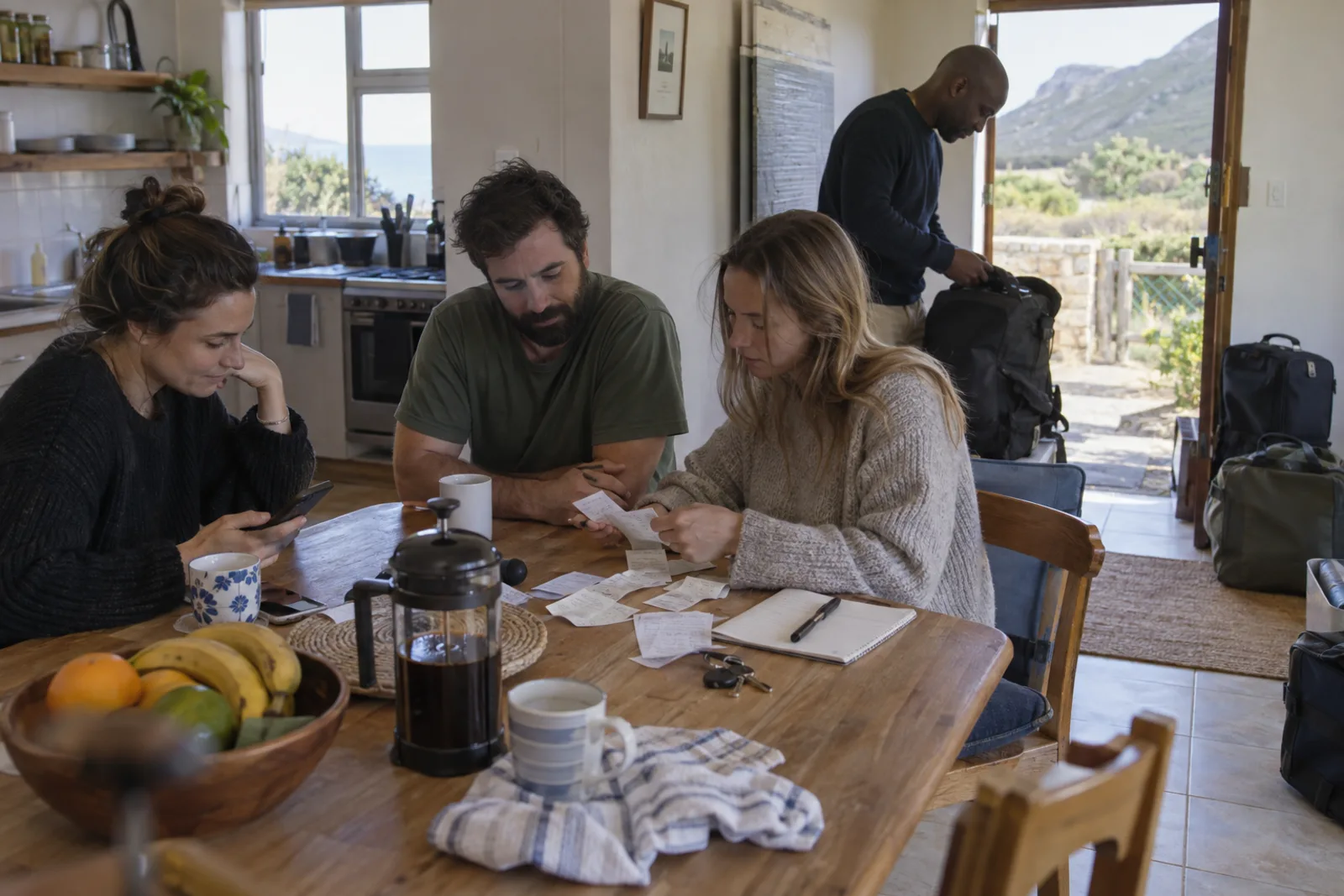
Agree the rules before booking, track spending as it happens and settle before heading home. A practical guide to deposits, shared meals, fuel and awkward shortfalls.
The accommodation deposit is due, but three people in the trip chat have not replied. To split group trip costs without resentment, agree the rules before booking, collect contributions before anyone fronts a large bill, record spending as it happens and settle before leaving.
Agree on the budget before anyone books
A group needs a spending limit, not just enthusiasm for a weekend away. Give everyone an estimated total that includes accommodation, transport, food and planned activities. Separate compulsory costs from optional ones. A R400 boat trip should not quietly become part of everybody’s bill because most people want to go.
Ask people to confirm that the budget works for them, with space to reply privately. Silence is not agreement. Put the cost-sharing rules in one message that everyone can find again, rather than scattering decisions through a week of chat.
Collect the deposit instead of lending it
Say six adults book a house costing R9,600 for the weekend, with a 50% deposit. If accommodation is being split equally, each person owes R800 upfront and another R800 for the balance. Set the collection deadline before the property’s payment deadline, allowing time for transfers to clear.
The person making the booking should ideally pay from collected contributions, not cover R4,800 and hope. If someone agrees to bridge a shortfall, record who owes them, how much and by when. Being the organiser does not automatically mean being the lender.
Agree on cancellation costs before paying, too. If someone withdraws, their share of an unavoidable, non-refundable charge should not silently land on everyone else. Any replacement payment or refund must reduce that liability.
Stop one person carrying the running costs
The same person often pays for groceries, firewood and ice because they arrive first or have their card ready. Those small purchases become a substantial float: money they have lent the group while everyone else still has theirs.
For six adults expecting R1,800 in shared grocery spending, collecting R300 each beforehand can help. Keep a separate record of that pot and return any surplus according to the agreed split. Contributions are advances, not additional expenses; they must count towards each person’s final balance.
If you prefer paying individually and settling later, set a limit. Nobody should keep advancing money beyond what they can comfortably spare. Reimburse them during the trip when necessary.
Log each expense while it is still obvious
Record a purchase when it happens, ideally before leaving the till. Each entry needs the payer, amount, purpose and people sharing it. Keep the receipt or a photograph, especially when one supermarket bill contains communal food, someone’s toiletries and drinks for only part of the group.
A useful entry is specific: R360 for Saturday breakfast, paid by Naledi, shared by all six adults. “Shopping: R740” leaves everyone guessing. If the receipt mixes shared and personal purchases, separate those amounts while the buyer still remembers what went into the basket.
Bringr keeps a running money tab per trip. Use that running record throughout the weekend rather than reconstructing spending from bank notifications on Monday.
Record repayments separately from purchases. A R300 transfer to reimburse a friend is not another R300 of trip spending.
Split evenly where it makes sense, fairly where it matters
Equal shares work well for genuinely shared costs. They work badly when people consume very different things. If six adults share R1,200 of food, that is R200 each. If only four share R600 of alcohol, add R150 to those four people’s shares, not R100 to everyone’s.
Keep optional restaurant extras personal where practical. Someone ordering a starter, cocktails and dessert should not assume the person having a main and tap water will subsidise them. Agree how to handle any service charge or tip, and check the bill before adding either.
Children need an explicit rule, not an argument at checkout. A group might count younger children as half a food share while charging accommodation by room. With four adults and two children on half shares, R1,000 of food becomes R200 per adult and R100 per child.
That is an example, not a universal formula. Teenagers may eat adult portions. A family occupying two bedrooms may reasonably pay more for the house than a couple sharing one.
Give fuel and tolls their own calculation
If one car carries four adults and uses R920 of fuel plus R280 in tolls on the agreed journey, the R1,200 total is R300 each, including the driver. Record who actually paid each bill. If passengers paid the tolls, the driver should not receive reimbursement for them.
Starting with a full tank and refilling to the same level after the shared journey gives a workable fuel measure. Keep private detours separate. Avoid charging both actual fuel and an all-inclusive kilometre rate, which can count fuel twice.
When one car handles everyone’s beach runs and grocery trips, share those agreed costs among the people benefiting. If the group wants to compensate the owner for vehicle wear or give the driver a discount, agree on that beforehand.
Settle before the cars leave
Make a short money check part of the final morning. Enter the last purchases, check who shared each cost and account for deposits, grocery advances and repayments already made. Then calculate each person’s net balance: what they should pay compared with what they have already contributed.
Use a clear instruction such as “Ayesha pays Thabo R285”, rather than asking everyone to interpret the whole ledger. Check recipient details before transferring. Treat a payment as complete when it arrives, not when someone says they will send it.
If the final fuel bill is still outstanding, name the person responsible for adding it and set a deadline for the last adjustment.
Handle a genuine shortfall privately
Someone who cannot pay needs a direct conversation, not public shaming in the trip chat. Establish whether this is a timing problem or whether the amount is unaffordable. Before booking, the answer may be cheaper accommodation, fewer paid activities or a shorter stay.
After spending has happened, agree on a realistic repayment plan. For a R900 shortfall, that might mean R300 now and two further R300 payments on specified dates. Check that the person owed money can manage the delay; their budget matters too.
If friends want to cover the shortfall as a gift, ask for voluntary contributions. Do not quietly divide it among everybody else. Confirm the arrangement privately in writing so nobody is left guessing whether the money is a loan, a gift or still overdue.
Related reading

How to plan a group trip where nobody forgets the gas bottle
Three people bring tongs, nobody brings fuel, and one person quietly pays for everything. Here is a simple way to split the packing, the jobs and the money before you leave.
By Allan Edgar ·