What to agree before a long road trip with friends
By Allan Edgar · · Updated 18 September 2026
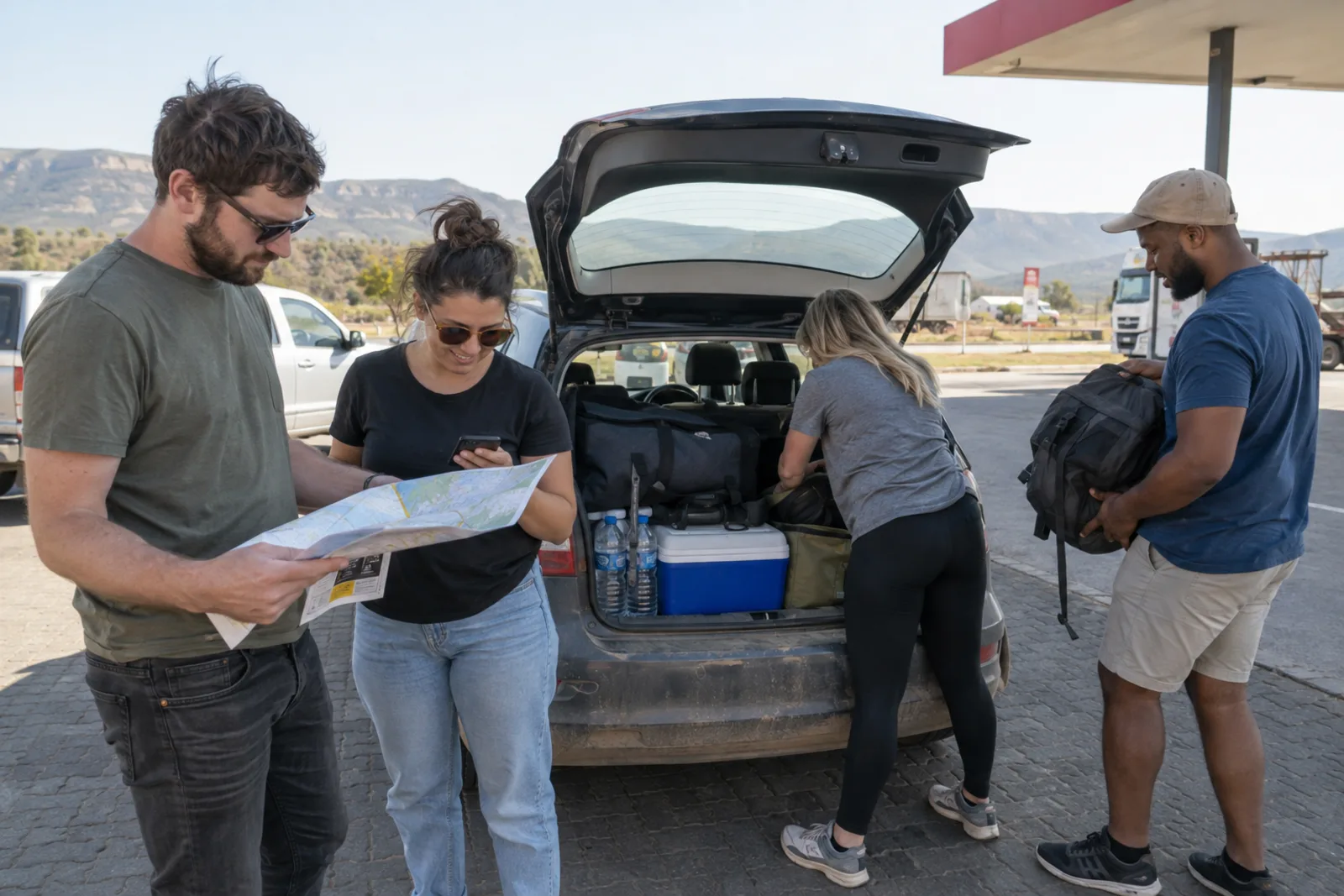
Settle the route, driving shifts, costs and car rules before departure, with practical checks for South African roads and neighbouring borders.
A boot full of bags does not mean a car is ready for four days on the road. Before a long road trip with friends, agree on the route, driving limits, money, border paperwork and everyday rules inside the car. Put the plan in one shared note before anyone pays a non-refundable deposit.
Agree on the route and a realistic driving day
A navigation app’s arrival time is not a group itinerary. Add time for meals, fuel, roadworks, toilet stops and the person who wants to photograph every mountain pass. On unfamiliar rural roads, plan to reach your accommodation before dark.
Set a daily limit in driving hours, not just kilometres. Six hours behind the wheel can easily become an eight-hour travel day. A short gravel section may take longer than a much greater distance on the N1. Mark the essential overnight stops, then agree which detours are optional and what gets dropped if you run late.
Check licences before dividing the driving
Check every proposed driver’s licence validity and vehicle category before departure. For rentals, ensure each driver is authorised under the agreement. Confirm insurance conditions for a privately owned car too, including any age restrictions or additional excesses.
Build the rotation around actual confidence and experience. Someone comfortable on a motorway may not want a mountain pass or busy border town. Plan a break at least every two hours, and stop sooner if anyone feels tired. Swapping seats does not fix a whole car full of sleep-deprived people. Agree on no alcohol for anyone due to drive.
Prepare the car for the full load
Check service needs early enough to fix a problem, rather than discovering it the afternoon before departure. Inspect tyres for damage and tread, and use the manufacturer’s recommended pressures for a loaded vehicle. Check fluids, lights, wipers and brakes.
Check the spare tyre, jack and wheel brace, including the locking-wheel-nut key if fitted. If the car uses a puncture repair kit, check its expiry date and limitations. Pack luggage securely, keep heavy items low and do not block the driver’s view. Confirm roadside cover, towing limits and exclusions for gravel roads or travel outside South Africa.
Sort border documents before booking the crossing
For Namibia, Botswana or Mozambique, check requirements for each traveller’s nationality with the relevant immigration authority or consulate. Passport validity rules, visa requirements and documents for children need separate attention. Do not assume everyone in the car has the same entry rights.
Verify the vehicle paperwork too: registration documents or accepted certified copies, any required owner or finance-company authorisation, and written cross-border permission for a rental. Ask the rental company about country restrictions and fees before paying. A booking confirmation is not cross-border approval.
Ask your insurer whether cover and recovery extend into every country on the route. Check compulsory third-party insurance, road-user charges and required safety equipment separately. Requirements can change, so use official sources rather than an old travel forum. Confirm the chosen border post’s operating hours and allow extra time for queues. Keep documents accessible, with secure digital backups, not buried beneath the cooler box.
Budget for the whole route, not one tank
Estimate fuel using the full distance, including local outings and a detour allowance. For example, 2,000km at 8 litres per 100km needs about 160 litres. At an illustrative R24 per litre, that is R3,840, or R960 each for four people. That is a planning example, not a current fuel-price quote. A loaded car, roof box or rough road can push consumption higher.
Add tolls using current SANRAL and relevant toll-concession schedules, plus parking, border costs and accommodation. Agree whether everyone splits vehicle costs equally, including the owner, and who pays an insurance excess after an incident. Use one expense record, keep receipts and settle regularly. Carry a backup payment method and some appropriate cash for places where cards fail.
Download maps before the signal disappears
Download offline maps for the entire route and destination areas over Wi-Fi. Save accommodation addresses, entrance instructions and booking references outside email. Offline maps do not provide reliable live traffic or closure information, so check conditions while connected.
Decide whose phone handles navigation and who reads directions. Pack compatible charging cables, a car charger and a power bank. For border crossings, compare roaming with local SIM or eSIM options and check handset compatibility.
Make seating and music rules unremarkable
Rotate cramped seats fairly, while accommodating motion sickness or mobility needs. Every passenger needs a proper seat and working seat belt; an extra friend cannot simply squeeze in.
Agree on music volume, playlist turns and quiet periods. The driver gets the final say when concentration matters. Headphones can settle competing tastes for passengers, not the driver. Decide whether eating in the car is fine and keep a rubbish bag within reach.
Plan food, fuel and proper stops
Ask about allergies, dietary needs and medication schedules before buying shared food. Agree whether breakfast comes from the accommodation, a supermarket or a sit-down café: those choices change both departure time and cost.
Carry drinking water and food that will survive the journey. Keep perishables properly chilled, not merely beside a melted ice pack. Mark dependable fuel and meal stops on remote stretches. Do not treat the low-fuel warning as the signal to start looking for a station.
Leave an itinerary with someone at home
Give one trusted person the route, overnight addresses, vehicle registration and travellers’ contact details. Agree when you will check in and what they should do if you miss that check-in. Tell them about route changes; an outdated itinerary is little help.
Keep emergency contacts, insurer details and roadside-assistance numbers available offline. In South Africa, 112 is the mobile emergency number; save local emergency numbers for each country too. Carry a first-aid kit and essential medication somewhere accessible. Finally, agree that anyone can ask for a safety stop without being mocked or outvoted. Keeping a booking is never a good reason to keep driving when it is unsafe.