A packing list that works for four families and one bakkie
By Allan Edgar · · Updated 18 September 2026
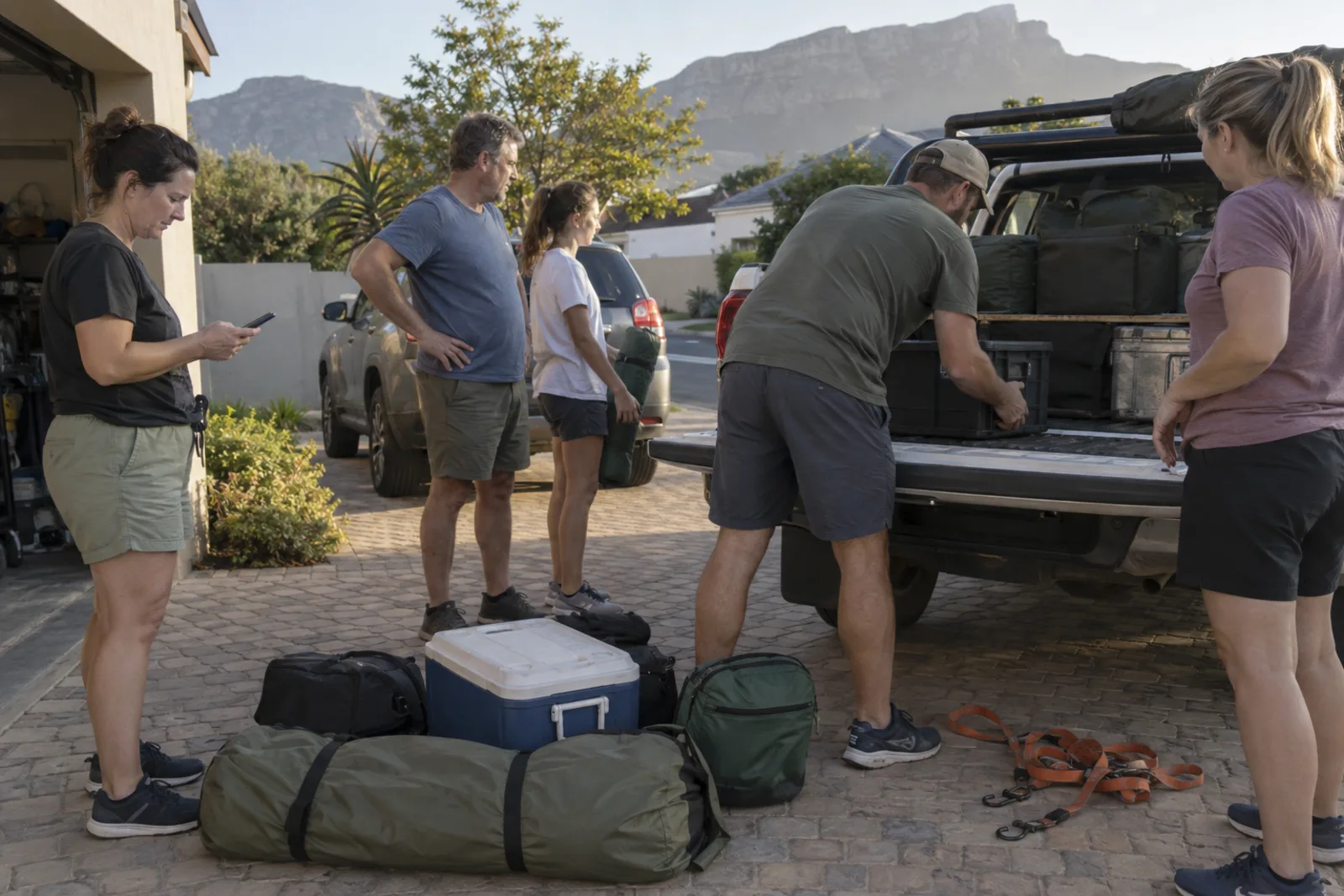
Separate shared gear from personal bags, give every item one owner, and plan the load before departure. A practical packing system for group camping and self-catering trips.
Three coolers beside a bakkie and no fuel for the cooker: that is the packing failure a group list should prevent. When four families travel together, the answer is not a longer WhatsApp thread. It is one shared list that separates communal gear from personal bags, names one person responsible for each item and records where it will travel.
Separate group gear from personal packing
Start with two lists. The group list covers equipment everyone depends on: tents, cooking kit, coolers, a gas bottle, water containers, a fuel jerry can where needed, lighting and a first aid kit. The personal list covers clothes, toiletries, bedding, medication and each person's eating kit, if that is your arrangement.
The distinction is responsibility, not ownership. Your tent becomes group gear if another household is sleeping in it. Write down its usable sleeping capacity and who is allocated to it. Nobody should discover at dusk that “sleeps six” meant six people without mattresses or luggage.
For self-catering accommodation, confirm what is supplied before allocating gear. Ask specifically about towels, bedding, cookware, fridge space, drinking water and backup lighting. “Fully equipped” is not a reliable inventory.
Give every shared item one named owner
Use a shared spreadsheet, collaborative checklist or simple document that everyone can open on a phone. The tool matters less than the fields: item, quantity or capacity, responsible person, vehicle or load position, and status.
A useful entry reads: Two-burner cooker; one; Zanele; bakkie kitchen crate; checked, not loaded. Give the gas bottle a separate entry. So should the regulator and hose if they are not permanently attached. A cooker without its connections is luggage, not a kitchen.
Assign an individual, not “the Dlaminis”. That person must source the item, check it works and make sure it reaches the vehicle. If someone else lends it, responsibility stays with the named person until a handover is agreed.
Count capacity, not just objects
“Cooler sorted” tells you very little. Record its size, what it will hold and who supplies the ice. Three households bringing their largest cooler can consume the load bay while leaving you without enough usable cold space for the planned meals.
Set the menu before finalising the kitchen load. Allocate meals, then combine shared ingredients and equipment. You probably do not need four frying pans. You may need two pots at once.
Do the same with chairs, mattresses and water. Count actual people, including children. Check water availability with the destination rather than assuming a campsite tap provides drinking water.
Pack by load, not by household
With limited space, four separate piles labelled by surname are the wrong starting point. Build functional loads instead: kitchen equipment together, shelter equipment together, and overnight bags within an agreed allowance. The bakkie carries the planned gear; everyone travels in a proper passenger seat, in other vehicles where necessary.
Put dense, heavy items low and distribute weight according to the vehicle's loading guidance. Check payload and axle limits, including passengers, accessories and luggage, rather than judging by how much space remains. Secure the load properly. A canopy is weather protection, not a substitute for restraints.
Keep the first aid kit, roadside equipment, drinking water and arrival lighting accessible. If you arrive after dark, the tent and its poles should not be buried beneath the entire kitchen.
Use approved fuel containers. Secure gas cylinders upright with valves protected, following transport guidance. Keep fuel away from food and ignition sources; do not treat an enclosed passenger compartment as fuel storage.
Two days before: prove that the list is real
Set a check-in deadline 48 hours before departure. “I've got one somewhere” is not confirmation. Each owner should physically find their assigned equipment and update its status. This leaves time to replace missing parts, refill supplies or borrow a smaller item.
- Pitch unfamiliar tents and check poles, pegs, flysheets and groundsheets.
- Test the cooker outdoors according to its instructions, and confirm enough suitable fuel for the planned cooking.
- Check lights, batteries, charging cables and any connectors the group needs.
- Inspect the first aid kit and replace missing or expired supplies. Personal medication remains on each traveller's own list.
- Measure bulky gear against the available load space and weigh heavy items where needed to check loading limits.
Resolve gaps that evening. If the load will not fit safely, remove equipment, redistribute it to another suitable vehicle or arrange extra capacity. Do not postpone that decision until departure morning.
In the driveway: check what is actually aboard
Choose one loading coordinator. Their job is to follow the agreed load plan and mark items as loaded, not to remember what every family promised. Owners bring their items to the loading point and identify them.
Use clear status labels: assigned, checked, loaded. An item changes to “loaded” only once it is physically in the named vehicle. Something sitting beside the garage is still not packed.
Before leaving, read out the critical items: shelter and bedding, water, food, cooker and fuel, first aid kit, and access details. Check restraints, closures and access to emergency equipment. Download the list and directions before mobile reception becomes unreliable.
Name the things everybody assumes are covered
The most easily missed items sit between categories: matches, a tin opener, dishwashing liquid, a washing-up basin, bin bags, toilet paper, a sharp knife and the key or gate code. Put each on the group list with an owner. “Someone always brings that” is not a system.
Keep a small shared essentials box for repeat trips, but give it a custodian who checks and replenishes it. A sealed box can still contain dead batteries and an empty lighter.
For critical items, deliberate duplication makes sense. Two working lights in different vehicles are useful. Four chopping boards brought by accident are not. Record intentional backups so they survive the space-saving decisions.
Keep the corrections for next time
Before everyone heads home, note what was missing, unused or too bulky. Record borrowed equipment and who is returning it. Save the corrected list as a template, then reassess it for the next destination and season. The aim is a lighter planning job next time, not a permanent licence to stop checking.